
Sheffield Memory Service &
Complex Geriatric Care
What Is the Most Common Cause of Dizziness in the Elderly?

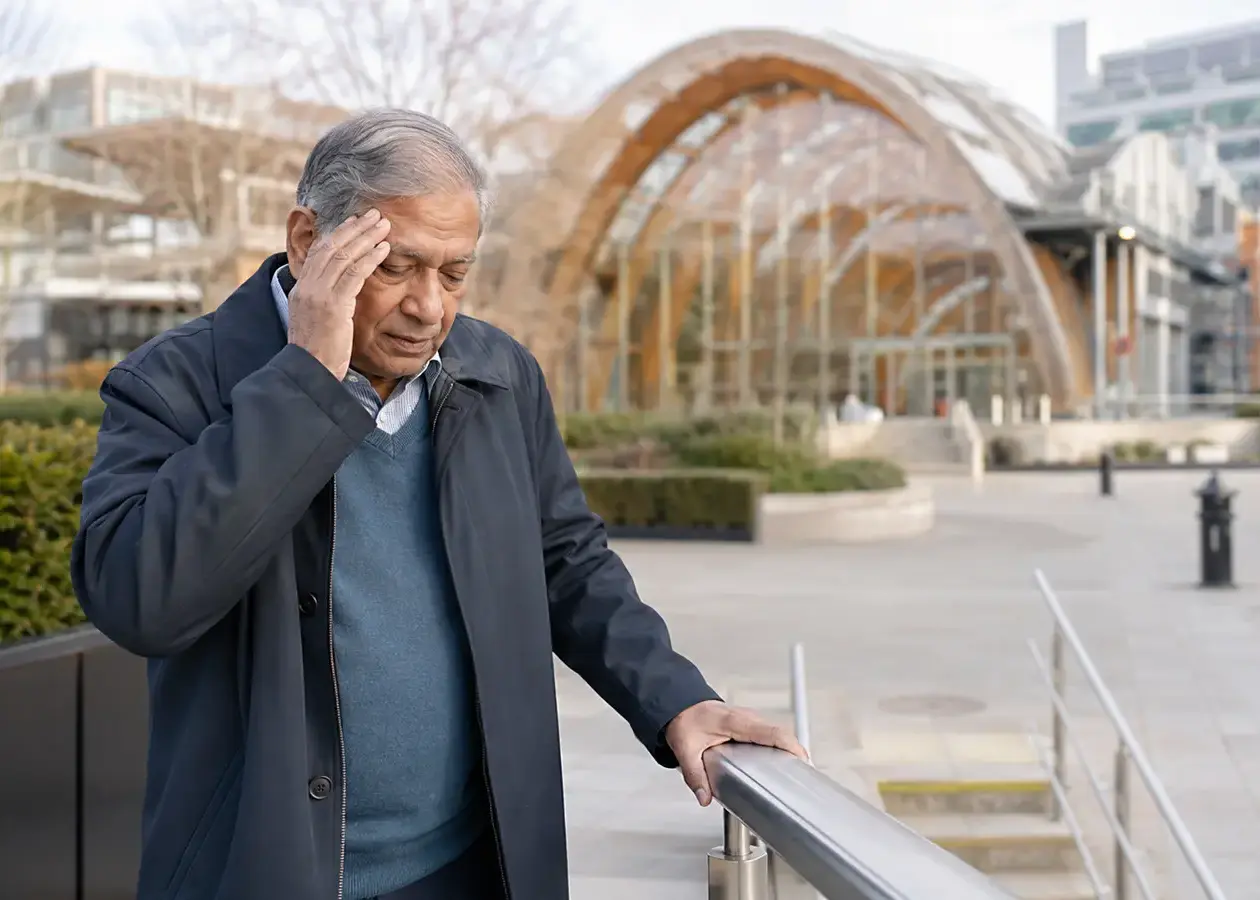
The most common specific cause of vertigo in older people is benign paroxysmal positional vertigo (BPPV) — an inner-ear condition that causes brief episodes of spinning, usually triggered by moving the head. NICE recognises BPPV as the most common cause of vertigo seen in clinical practice.
However, “dizziness” is not one condition. In my clinic, older patients rarely present with a single clean cause — dizziness in later life is often multifactorial, layering medication effects, a fall in blood pressure on standing, dehydration, poor vision, heart rhythm abnormalities and balance disorders on top of one another. That is precisely why a single-issue approach — treating “dizziness” as one problem to be medicated away — so often fails older patients, and why I assess it as part of a Comprehensive Geriatric Assessment rather than in isolation.
What does “dizziness” mean?
People use the word dizziness to describe several different sensations, and distinguishing between them is the first diagnostic step:
- Vertigo — feeling that you or the room is spinning
- Light-headedness — feeling faint or as though you may pass out
- Imbalance — feeling unsteady when standing or walking
- Non-specific dizziness — feeling vague, disconnected or “not quite right”
Each has different causes and different treatments. Assuming vertigo when the true symptom is postural light-headedness (or vice versa) leads to the wrong investigation and the wrong treatment.
What is BPPV?
Benign paroxysmal positional vertigo is caused by tiny calcium crystals becoming displaced within the balance canals of the inner ear. When the head moves, these crystals stimulate the balance system incorrectly and produce a sudden spinning sensation. BPPV becomes more common with age.
The name describes the condition:
- Benign — not usually dangerous
- Paroxysmal — symptoms occur suddenly and intermittently
- Positional — attacks are triggered by changes in head position
- Vertigo — a false sensation of movement or spinning
What are the symptoms of BPPV?
- Sudden spinning when turning over in bed
- Dizziness when getting into or out of bed
- Spinning when looking upwards or bending down
- Attacks lasting a few seconds, usually less than one minute
- Nausea
- Unsteadiness following an attack
BPPV does not normally cause continuous dizziness, hearing loss, fainting, weakness or difficulty speaking. Any of those features should raise suspicion of a different diagnosis.
How is BPPV diagnosed?
BPPV is usually diagnosed from the history and a positional examination such as the Dix–Hallpike test, in which the head and body are moved into a specific position while the clinician watches for the characteristic involuntary eye movements (nystagmus) that confirm the diagnosis.
A brain scan is not routinely required when the history and examination are typical. Further investigation is reserved for symptoms that are unusual, persistent, or accompanied by neurological signs.
How is BPPV treated?
BPPV can often be treated without medication. A trained clinician performs a canalith repositioning manoeuvre — most commonly the Epley manoeuvre — which guides the displaced crystals out of the affected balance canal. Improvement can be rapid, though the manoeuvre sometimes needs repeating.
I would not perform an Epley manoeuvre on an older patient with significant neck disease, severe back problems, vascular disease, or restricted mobility without a fuller assessment first. BPPV can also recur after successful treatment — recurrent symptoms warrant reassessment rather than an assumption that the cause is unchanged.
Other common causes of dizziness in older people
A fall in blood pressure on standing. Postural (orthostatic) hypotension causes light-headedness, blurred vision, weakness or near-fainting rather than spinning. Contributors include dehydration, blood-pressure medication, diuretics, Parkinson’s disease, diabetic autonomic neuropathy, and prolonged bed rest. Blood pressure should be measured lying down and again after standing.
Medication side effects. Often overlooked, and often cumulative. Common contributors include blood-pressure medicines, diuretics, sleeping tablets, sedatives, antidepressants, strong painkillers, anti-epileptic medicines, Parkinson’s medication, and drugs with anticholinergic effects. Risk rises sharply with polypharmacy. Medication should be reviewed by a doctor or pharmacist, never stopped abruptly without advice.
Dehydration. Older people often don’t feel thirst as strongly, and diuretics, illness, diarrhoea, vomiting and poor oral intake compound the risk, particularly in hot weather.
Balance and walking disorders. Age-related change across vision, sensation, muscle strength, joints and the inner ear rarely acts alone — neuropathy, arthritis, Parkinson’s disease and previous stroke commonly combine to produce imbalance.
Heart problems. An abnormal rhythm, slow pulse, valve disease or other cardiovascular problem can reduce cerebral blood flow, producing light-headedness, collapse, breathlessness, palpitations or chest discomfort.
Vestibular neuritis and labyrinthitis. These inner-ear conditions cause more prolonged vertigo than BPPV. Labyrinthitis may also cause hearing loss; vestibular neuritis generally does not.
Stroke or TIA. Less common, but important — particularly when dizziness begins suddenly alongside other neurological symptoms. Isolated dizziness without other neurological signs is less often stroke-related, but severe or persistent symptoms still warrant proper assessment.
Why dizziness in older people shouldn’t be dismissed
Dizziness is not a normal part of ageing to be tolerated. Left unassessed, it can lead to falls and fractures, fear of falling, reduced mobility, loss of independence, avoidance of social activity, and hospital admission. Even when BPPV is confirmed, other contributing factors — medication, blood pressure, vision, muscle strength — often still need addressing. This is the core argument for assessing dizziness as one part of a whole-person review rather than chasing a single diagnosis in isolation: I see patients where BPPV has been correctly treated but the underlying postural hypotension or polypharmacy driving their falls risk was never addressed.
When is dizziness an emergency?
Call 999 if sudden dizziness occurs with: facial weakness; arm or leg weakness or numbness; difficulty speaking; new double vision or loss of vision; inability to stand or walk; a severe new headache; loss of consciousness; chest pain; severe breathlessness; or persistent vomiting. These may indicate stroke or another serious neurological or cardiovascular event.
When should an older person seek assessment?
Arrange assessment if the dizziness is new, recurrent or worsening; has caused a fall or near-fall; occurs on standing; is associated with palpitations; persists between attacks; comes with hearing loss or tinnitus; began after a medication change; or is affecting walking, confidence or independence.
I assess dizziness in older adults across Sheffield as part of a Comprehensive Geriatric Assessment — medication review, lying and standing blood pressure, ear and neurological examination, heart rhythm assessment, balance testing and positional testing for BPPV — rather than treating it as an isolated symptom. No GP referral is required, and most patients are seen within 24–48 hours, including home visits.
See the full dizziness assessment service →Frequently Asked Questions
What is the most common cause of dizziness in an elderly person?
BPPV is the most common specific cause of vertigo, particularly when there is brief spinning triggered by head movement. Light-headedness or general imbalance is more often caused by medication, dehydration, postural hypotension, or several factors acting together.
What causes dizziness when an older person gets out of bed?
Spinning when turning or sitting up in bed suggests BPPV. Feeling faint after standing is more suggestive of postural hypotension. The distinction requires assessment.
Can medication cause dizziness in older people?
Yes. Blood-pressure tablets, diuretics, sleeping tablets, antidepressants, painkillers and several other medicines can cause dizziness or worsen balance, particularly in combination.
Is dizziness a normal part of ageing?
No. It becomes more common with age, but it should not be accepted as normal. Most causes are identifiable and treatable.
Can ear crystals cause dizziness?
Yes. In BPPV, tiny calcium crystals become displaced into the balance canals of the inner ear. Particular head movements then trigger short bursts of vertigo.
Does BPPV cause constant dizziness?
Usually not. BPPV typically causes brief attacks lasting seconds, triggered by head movement. Constant or prolonged dizziness should prompt consideration of other diagnoses.
Which doctor should assess dizziness in an older person?
A GP can carry out the initial assessment. A geriatrician is particularly useful when dizziness is associated with multiple medications, falls, frailty, blood pressure problems, walking difficulty, or several possible contributing conditions together.

Dr Pravin Jha
Consultant Geriatrician, Sheffield Memory Service & Geriatric Care